
Most “premium” gift boxes I see in procurement briefs are designed backwards. The brand approves foil, soft-touch lamination, and a magnetic closure on a mockup — then the first production run arrives on a 1.2 mm board that flexes in the hand. The box photographs beautifully; it feels cheap.
Perceived luxury in a custom gift box is roughly 70% structure and material, 30% print and finish — and the brands who invert that ratio spend real money producing disappointment.
The Luxury Priority Stack
Luxury levers are not interchangeable. Stack them in this order, and each dollar buys more perceived value than the one before:
- Structure — rigid vs. folding carton, two-piece vs. magnetic, interior fit
- Material — board caliper, wrap paper GSM, interior lining
- Print — color fidelity, Pantone vs. CMYK, rich black execution
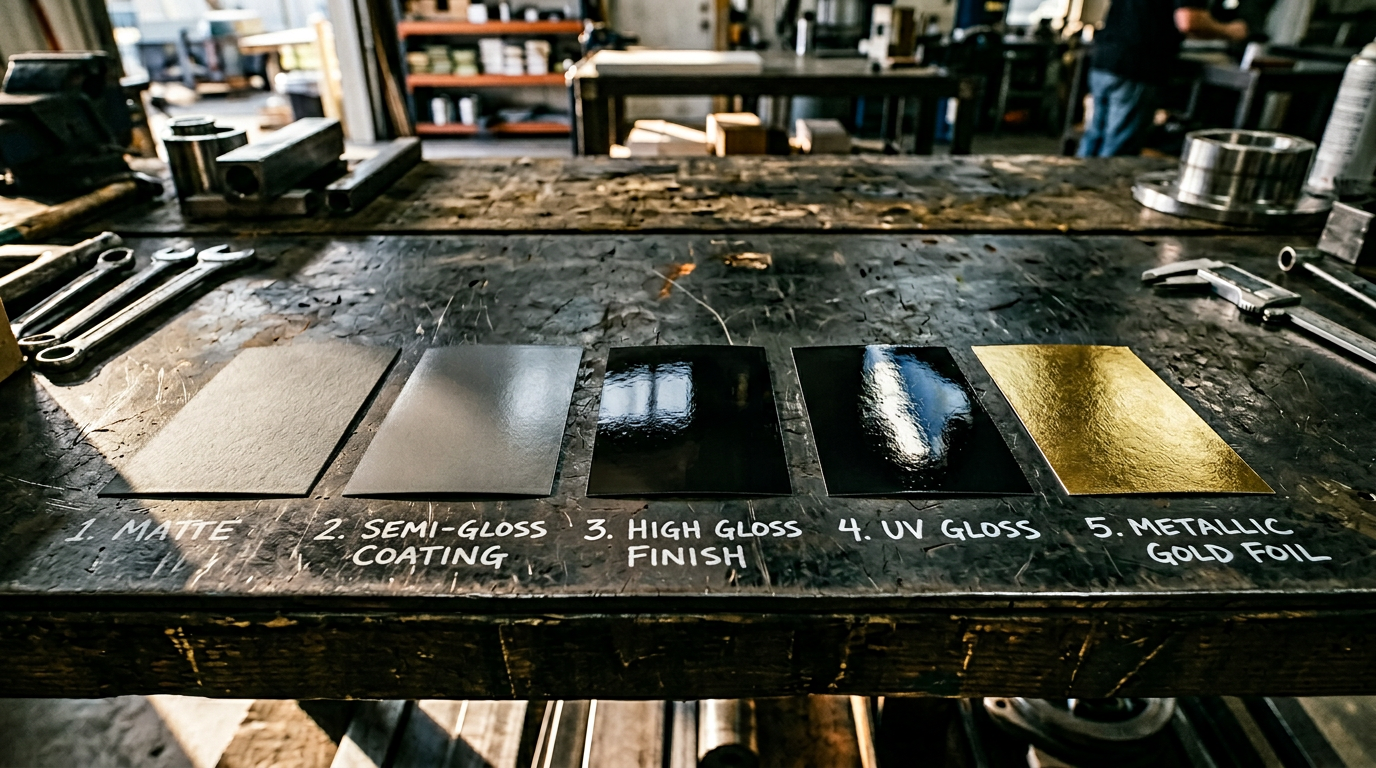
- Finish — matte/soft-touch lamination, spot UV, foil stamping, embossing
- Embellishment — ribbons, wax seals, printed tissue, custom inserts
These rungs are not interchangeable. The top two carry roughly 70% of the perceived-luxury signal; the bottom three split the remaining 30%.
Never spend on rung N before you’ve maxed out rung N-1. The same logic maps onto where to save and where to invest on the overall spec — cut embellishment before you cut board.

Structure: Where Luxury Actually Lives
Two of the most iconic luxury boxes in the world have almost no finish on them. Apple shipped roughly 45 million iPhones in a single quarter in 2024, each in a rigid paperboard box with matte finish, a single embossed image, and a molded pulp interior tray — no foil, no magnetic closure. The Tiffany Blue Box has carried the same brand for over a century on two-piece rigid construction, Pantone 1837 wrap, satin ribbon, and interior lining.
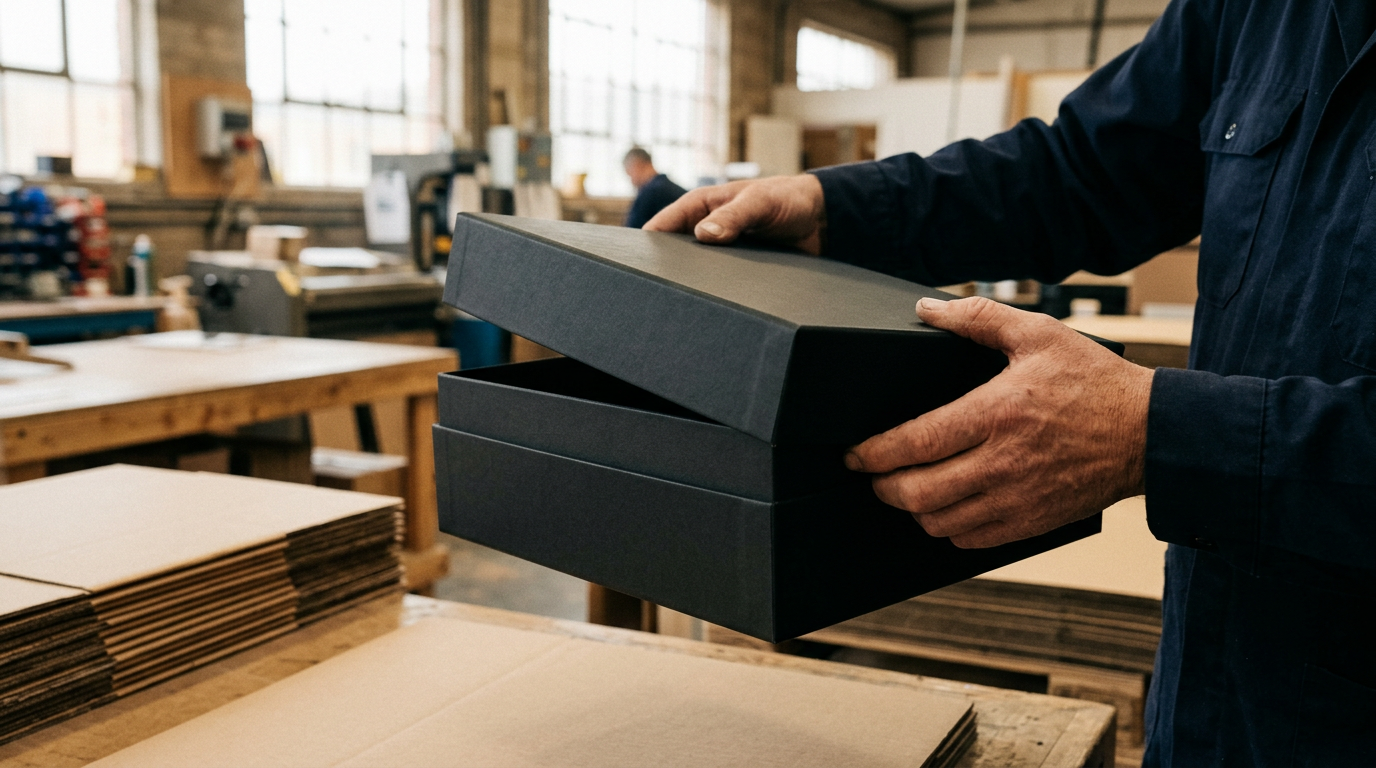
Structure is what the customer’s hand registers in the first second, before the eyes finish processing the print. Weight, lid-to-base fit, hinge resistance, whether the closure snaps or mushes. Rigid boxes with thick chipboard wrapped in specialty paper are where most luxury categories start, because chipboard in this class runs 3-4 times thicker than folding-carton material and the stiffness is felt immediately.
Pick the rigid class first, the closure second: a well-built magnetic closure box earns its keep only when the caliper underneath can recess the magnet cleanly.
Material: The Specs That Signal “Premium” in the Hand
“Use quality materials” is the vaguest instruction in packaging. You brief a supplier on caliper, GSM, and tolerance — not on “quality.”
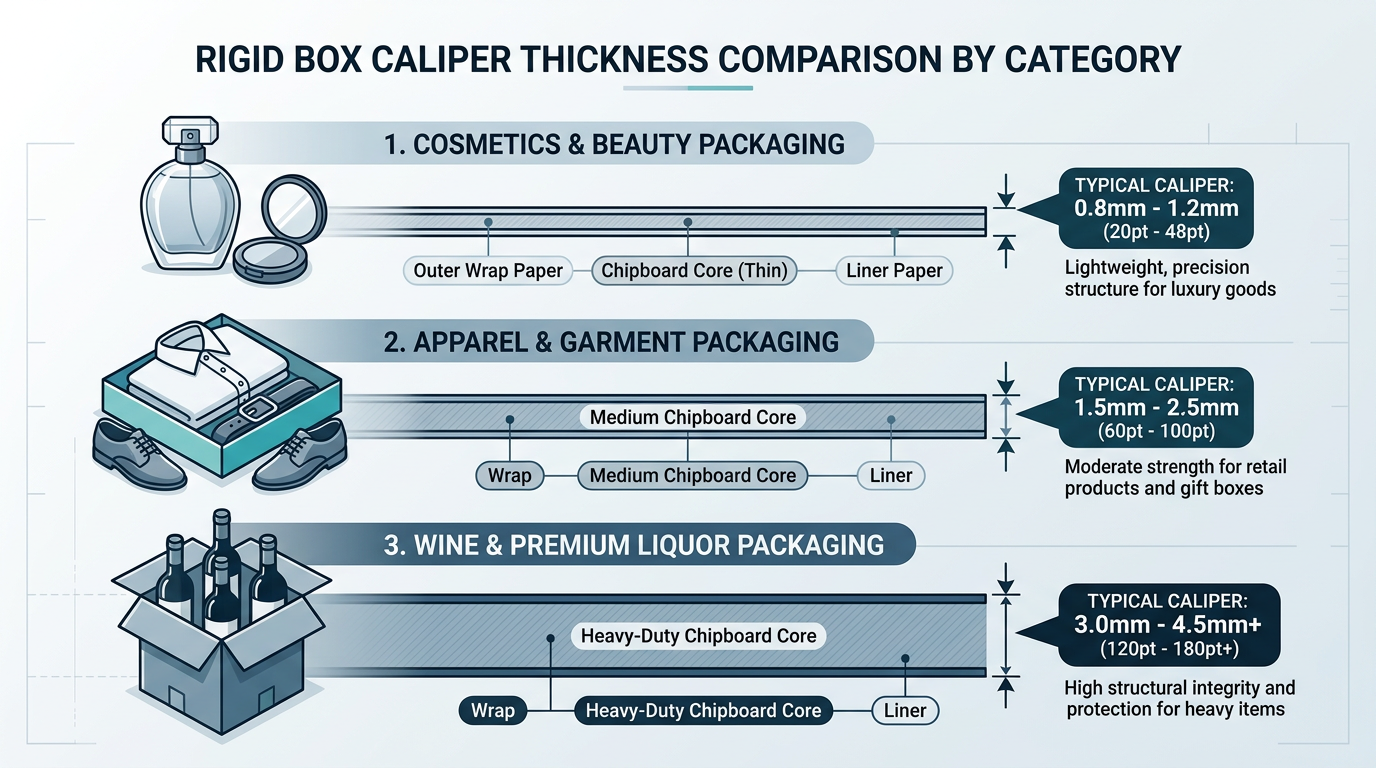
Caliper Thresholds by Product Category
Here are the thresholds current industry practice maps to product categories:
| Product Category | Board Caliper (2025 industry practice) |
|---|---|
| Cosmetics, perfume, watches, small jewelry | 1.5–2 mm |
| Apparel, electronics, shoes, gift sets | 2–2.5 mm |
| Wine, luxury watches, heavy or delicate items | 2.5–3 mm |
Greyboard for luxury rigid boxes typically runs 800–2100 GSM wrapped in specialty paper. Write the target caliper into the PO with a tolerance of ±0.15 mm (e.g., “2.0 mm ±0.15 mm”). Without that language, you receive whatever the factory’s current sheet stock happens to be.
The 1.2 mm Magnetic-Bump Failure Mode
One failure mode the numbers explain: a magnetic closure on a 1.2 mm box produces a visible bump where the magnet sits, because the board is too thin to recess it. That bump is the single most common “looks premium, feels cheap” tell on incoming samples.
Bumping caliper from 1.2 to 2.0 mm costs pennies per unit. Hot foil across the same panel costs dollars per unit.
Interior Fit
If the product rattles inside a loose cavity, the customer’s hand tells them the brand didn’t think about them. Spec a molded pulp or EVA foam insert that holds the product with zero movement, or commit to a structured fabric lining.
Print and Finish: The 30% That Amplifies, Never Rescues
Finish is the amplifier on a signal structure and material already generated. Get the foundation right and a modest finish reads as confident restraint. Get it wrong, and no amount of foil can rescue the box.
The Finish Cost Ladder
The cost ladder reveals where finish money actually goes:
| Finish | Industry pricing range (per sq in) | One-time die cost |
|---|---|---|
| Matte lamination | $0.03–0.05 | none |
| Spot UV | $0.08–0.12 | none |
| Embossing / debossing | $0.10–0.20 | $200–500 |
| Hot foil stamping (gold/silver) | $0.15–0.25 | $200–500 |
| Holographic foil | $0.30–0.40 | $200–500 |
A full foil panel on a mid-size gift box adds a dollar or more per unit; a caliper bump from 1.5 to 2.5 mm adds cents. If you have $0.80 of finish headroom, that money buys more perceived value on the board than on the surface treatment. The deeper finish-ROI tradeoffs matter most on folding cartons, where structure is capped and finish has to work harder.
Color Fidelity: Pantone vs CMYK
CMYK approximation of a brand color looks cheaper than a Pantone solid. Tiffany’s entire brand runs on Pantone 1837 — matching one trademarked solid across every box is itself a luxury signal. If rich black appears in the design, spec a four-color build rather than letting the printer default to 100K.
The 60-Second Hand-Test for Every Incoming Sample
Before you commit to a supplier, run this test on the first sample. It predicts customer-arrival experience better than any photograph.
- Weight. Pick the empty box up. Does it feel dense for its size, or hollow? Hollow = under-spec’d board.
- Hinge or lid fit. Open and close five times. A premium lid seats with soft, even resistance. Magnetic closures should snap cleanly without the magnet bump showing from outside.
- Interior. Place the actual product inside. If it moves more than 2 mm in any direction, the insert is wrong.
- Corners and edges. Run a thumbnail along the wrap seams. Edge lifting within 60 seconds means the adhesive or wrap GSM is wrong.
- Drop test. Drop the packed box from counter height. If the structure deformed, the hinge loosened, or the product shifted, that box will arrive damaged.
Weight, tight lids, and the micro-effort of opening register as quality signals before the eyes finish their job — though friction without product substance reads as manipulation and collapses perceived value.
The most expensive mistake I see brands make is approving a box on a photograph. Commission two samples per short-listed supplier — one minimal spec, one fully finished — and run this test on both before signing the PO.
The Bottom Line
Luxury in a gift box is a floor of structure with finish applied on top. Every dollar you move from embellishment down to caliper, wrap, and interior fit buys more perceived value than the dollar before it.
Before your next supplier brief, challenge every line item against the priority stack. If a finish is specified before the caliper and tolerance are locked, cut the finish and spend the saving on the board.


