or artisanal food brands and Amazon sellers, shipping a gourmet product across the country is a complex logistical challenge. Beyond ensuring your baked goods or confections arrive in one piece, you must also ensure they arrive safe to eat. In the food industry, packaging is not just a marketing tool; it is a critical scientific barrier.
Putting a consumable product into the wrong type of box can alter its flavor, reduce its shelf life, or worse, introduce harmful chemicals. Understanding the science and regulations behind a food safe folding carton is essential for protecting your customers and your business. Here is an easy-to-understand breakdown of the chemistry and compliance standards that dictate modern food packaging.
What Makes a Food Safe Folding Carton Essential for E-Commerce?
When you place a food item inside a box, a microscopic chemical interaction begins. Paperboard is naturally porous, meaning it can absorb moisture and oils from the food, while simultaneously releasing its own trace chemicals into the enclosed air.
A food-safe carton is scientifically engineered to control this environment. It ensures that the structural materials, the printed colors, and the protective coatings remain completely inert. This means they will not react with the food, alter its molecular structure, or change its taste and odor during transit.
How Do You Determine Direct Food Contact vs. Indirect Contact?
The first step in packaging science is determining the proximity between the food and the cardboard. Regulatory bodies categorize this into two distinct scenarios:
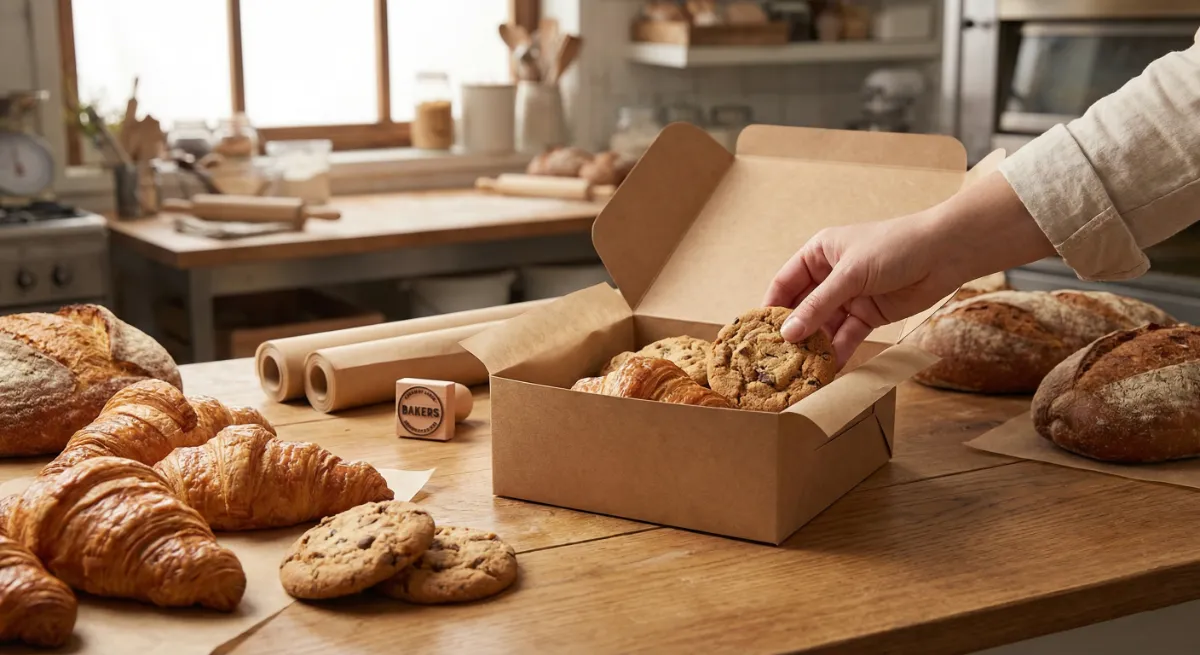
- Direct Food Contact: This occurs when the physical food touches the raw paperboard. Think of a freshly baked, un-wrapper cookie or a naked cupcake sitting directly on the bottom of the box. Because the oils and moisture from the food act as a sponge, pulling molecules from the cardboard, the packaging must meet the absolute highest purity standards.
- Indirect Contact: This happens when the food is already sealed in a primary barrier, such as a plastic bag or a foil wrapper, before being placed in the box. Because the box is only holding the wrapper—not the food itself—the chemical regulations are slightly less stringent.
What Does FDA Compliant Packaging Actually Mean?

In the United States, the Food and Drug Administration (FDA) sets strict guidelines for what can legally touch consumable goods. FDA compliant packaging means that every single component of the box has been laboratory-tested and verified safe for human health.
To achieve this compliance, manufacturers must prove that the packaging will not experience “harmful migration.” Migration is the scientific term for molecules transferring from the packaging material into the food. FDA compliance guarantees that under normal shipping temperatures and shelf-life durations, your packaging will not leach dangerous toxins into the product.
Why Is Virgin Food-Grade Paperboard Preferred Over Recycled Board?
Entrepreneurs often want to use 100% recycled paperboard for their eco-friendly brand image. However, when it comes to food safety, recycled board is heavily restricted.
Recycled paper is made by repulping old newspapers, shipping boxes, and mixed office paper. Because manufacturers cannot trace exactly where that recycled paper came from, it may contain microscopic traces of heavy metals, old industrial inks, or harsh cleaning chemicals.
To eliminate this contamination risk, the industry relies on virgin food-grade paperboard, specifically Solid Bleached Sulfate (SBS). Virgin board is made directly from freshly harvested wood pulp. It has never been used for anything else, guaranteeing absolute chemical purity and making it the safest choice for direct contact with food.
How Do Inks and Coatings Affect Custom Food Boxes?
The physical cardboard is only one part of the equation. To create beautiful custom food boxes, brands use vibrant inks and glossy finishes. However, standard industrial printing chemicals are highly toxic and can easily volatilize (turn into a gas) inside a closed box, tainting the food.
To solve this, food packaging utilizes specialized chemistry:
- Low-Migration Inks: Instead of petroleum-based inks, food-safe boxes are printed using vegetable or soy-based inks. These inks are formulated with larger molecules that are physically too heavy to migrate through the paperboard and into the food.
- Aqueous Coatings: To protect the ink and give the box a smooth finish, manufacturers use water-based (aqueous) coatings. Unlike traditional plastic laminations or UV coatings that contain harmful chemical solvents, aqueous coatings dry safely and create a non-toxic barrier between the ink and your product.
Summary
Navigating food packaging regulations is an exercise in material science and chemistry. By understanding the differences between direct and indirect contact, utilizing pure virgin paperboard, and insisting on low-migration inks, artisanal sellers can confidently ship their products nationwide.
Mastering these safety standards ensures that your food arrives tasting exactly as you intended, while fully complying with health regulations.